

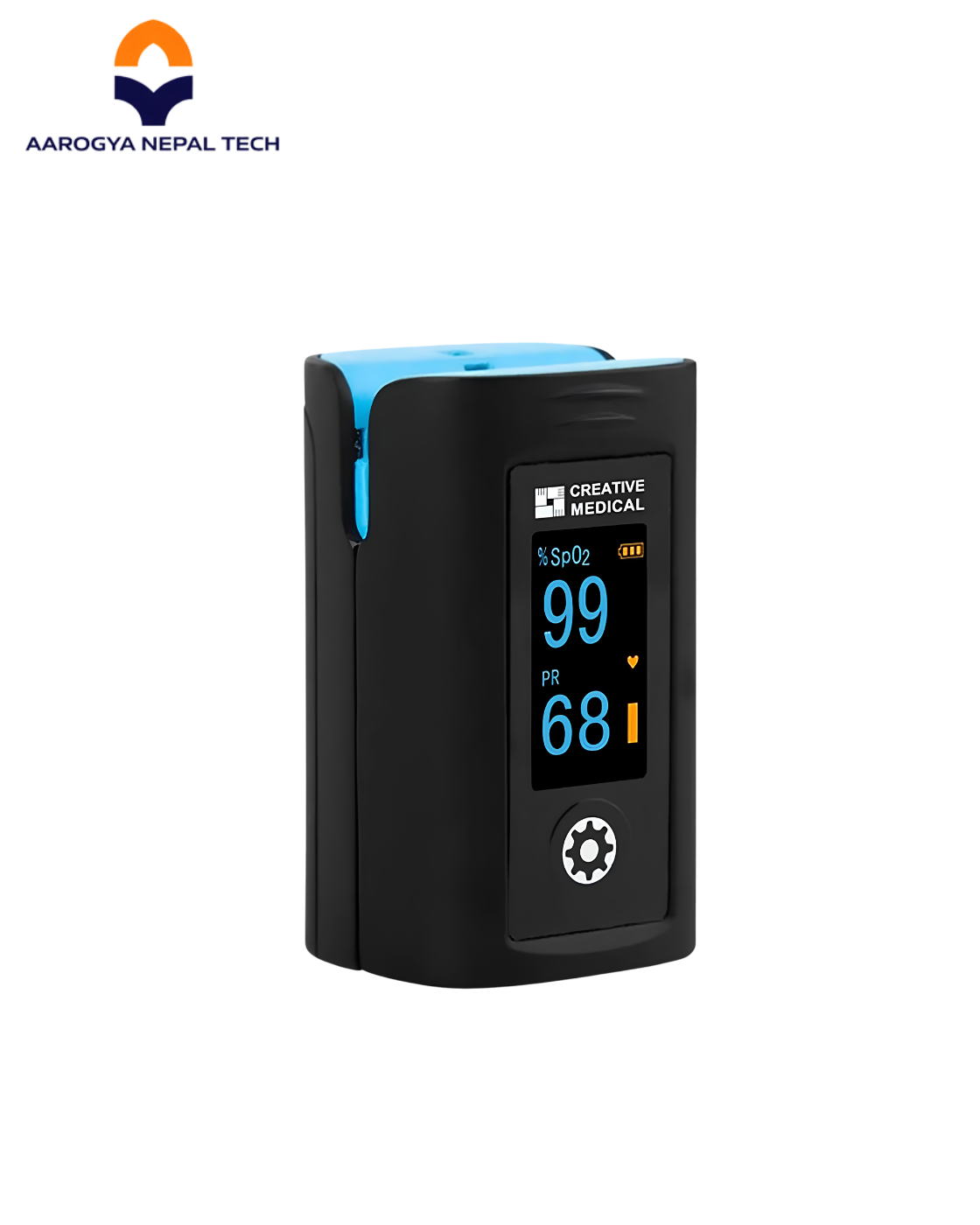
Why Every Trekking Company in Nepal Should Carry a Pulse Oximeter
Why Every Trekking Company in Nepal Should Carry a Pulse Oximeter
The group is approaching Namche Bazaar after a long day of climbing from Phakding. The trail is steep, the air is thinner, and one trekker is moving noticeably slower. She is breathing harder than everyone else and has stopped twice in the last half hour.
The guide notices. He reaches into his kit, clips a small device onto her fingertip, and waits a few seconds. Within moments he has two numbers: oxygen saturation and pulse rate. The readings are low, so he adjusts the plan — a slower pace, more water, an early night at the next lodge.
That small, palm-sized device is a pulse oximeter, and for anyone running a trekking company in Nepal, it should be as standard in the kit as a first aid bag or a headlamp. High altitude health monitoring is not a luxury on Himalayan routes. It is part of responsible trekking.
In this guide, we look at why a pulse oximeter for trekking in Nepal matters, how it works, and why every trekking company should carry one.
Why Oxygen Monitoring Matters During High-Altitude Trekking
The air you breathe at sea level is rich with oxygen. As you climb, atmospheric pressure drops, which means each breath carries fewer oxygen molecules — even though the proportion of oxygen in the air stays the same.
At Lukla (2,860m), the oxygen in each breath is already noticeably thinner. At Namche Bazaar (3,440m), it drops further. By the time a trekker reaches Everest Base Camp (5,364m), the body is functioning on roughly half the oxygen it would get at sea level.
This is why high altitude health monitoring is so useful on routes like:
- Everest Base Camp — the classic trek through the Khumbu region
- Annapurna Circuit — crossing Thorong La at 5,416m
- Langtang Valley — reaching up to 5,000m at Kyanjin Ri
- Manaslu Circuit — crossing Larkya La at 5,106m
- Kanchenjunga Base Camp — one of Nepal’s most remote high routes
At these elevations, the body needs time to adapt. That adaptation is called acclimatization, and it happens at different speeds for different people. A fit trekker is not automatically protected; age, hydration, rest, and genetics all play a role.
Mountain medicine organisations such as the International Society for Mountain Medicine and the UIAA Medical Commission publish detailed guidance on acclimatization and altitude awareness for trekkers and operators. Their advice is consistent: ascend slowly, rest often, and monitor how each person responds to altitude.
Oxygen saturation — the percentage of oxygen carried by red blood cells — gives a guide a quick, objective picture of how a trekker is coping. It is one useful input, alongside symptoms and experience, for deciding whether to slow down, rest an extra day, or descend.
This is why a pulse oximeter for trekking in Nepal has become a recommended item on high-altitude itineraries, and why guides now carry one as routinely as a water filter.
What Is a Pulse Oximeter?
A pulse oximeter is a small medical device that measures two things:
- Oxygen saturation (SpO₂) — the percentage of haemoglobin in the blood carrying oxygen
- Pulse rate — the number of heartbeats per minute
For a healthy person at low altitude, SpO₂ is usually between 95% and 100%. At high altitude, lower readings are normal — and that is exactly why the device is so valuable in the mountains. It tells you what a specific person’s oxygen saturation is at a specific moment, at a specific altitude.
The device itself is small enough to slip into a pocket. A fingertip model weighs around 50 grams and runs for days on a pair of AAA batteries. That portability is one reason a pulse oximeter for trekking in Nepal has become a standard piece of mountain safety equipment.
The same reading is one of the vital signs to monitor at home covered in our home health monitoring guide, which is useful for guides and clients alike to understand.
Callout: A number, not a diagnosis
A pulse oximeter measures oxygen saturation and pulse rate. It does not diagnose altitude sickness. Always interpret readings alongside symptoms and clinical judgment — and descend if there is any doubt.
How Does a Pulse Oximeter Work?
The science is straightforward, even if the optics sound complex.
Inside the fingertip clip are two small light sources: one red and one infrared. Oxygenated blood absorbs infrared light differently from oxygen-depleted blood. As blood pulses through the fingertip, a small sensor measures how much of each light passes through.
By comparing the two signals, the device calculates the percentage of oxygenated blood. The same sensor picks up the pulse, which is why the device also displays heart rate.
Results appear on the screen within seconds. There is no blood, no needles, and no setup. The trekker simply sits still, places a finger in the clip, and waits for the reading to settle.
Why Every Trekking Company Should Carry a Pulse Oximeter
A pulse oximeter is one of the most cost-effective additions to a trekking kit, and it earns its place on every guided route. For any serious operator, a pulse oximeter for trekking in Nepal is standard equipment.
Enhances Trekker Safety
Guides can spot early signs of a trekker struggling at altitude before symptoms become serious. A falling SpO₂ reading, combined with a rising pulse, is useful information that supports a decision to rest, hydrate, or adjust the day’s plan.
Supports Better Decision-Making
Trekking decisions — how far to walk, whether to cross a pass, when to descend — benefit from data. A reading helps a guide compare a trekker’s oxygen saturation with their symptoms and make a more informed call than relying on observation alone.
Quick Oxygen Saturation Monitoring
The check takes seconds. A guide can test the whole group at a rest stop without slowing the day, and repeat the test whenever someone reports feeling unwell.
Easy to Carry
A fingertip pulse oximeter fits in a pocket or a small pouch on a harness. It adds almost no weight, which matters on trails where every gram counts.
Fast Results
A stable reading appears within 10 to 15 seconds. That speed matters in an emergency, when waiting is not an option.
Suitable for High Altitude
The device is designed for cold, demanding conditions. Quality models cope with the temperature swings and light impact of mountain travel, and batteries last for days of continuous use.
Supports Emergency Preparedness
Every serious trekking kit should prepare for the unexpected. When a rescue team or remote physician is on the phone, an up-to-date oxygen saturation reading helps them assess the situation before they arrive. It provides useful information alongside symptoms and clinical judgment.
| Benefits of Carrying a Pulse Oximeter During Trekking | What It Means |
|---|---|
| Fast monitoring | Reading in 10–15 seconds; whole group can be checked at a rest stop |
| Lightweight | Fits in a pocket; negligible added weight |
| Objective data | Supports acclimatization and descent decisions |
| Early insight | Helps guides notice altitude-related changes earlier |
| Emergency support | Useful information to share with rescue teams or remote doctors |
| Low cost per trek | One device serves every group, every season |
Benefits for Trekking Guides
For the guide on the trail, a pulse oximeter for trekking in Nepal is a working tool that makes the job easier and safer.
Morning checks. Starting each day with a quick SpO₂ reading gives a baseline. If a trekker’s oxygen saturation has dropped sharply overnight, the guide knows to keep a closer eye on them.
Acclimatization days. Rest days are built into high-altitude itineraries for a reason. A pulse oximeter helps the guide confirm that rest is working — readings that hold steady or improve are a good sign; readings that keep falling suggest the plan needs to change.
High camps. On expedition-style climbs, oxygen saturation checks at camp are part of the routine. They help the leader judge how each member is coping before a summit push.
Tracking changes over time. A written log of daily readings shows trends, not just single numbers. A gradual decline across several days tells a different story than one low reading on one afternoon.
Supporting communication with healthcare professionals. If a trekker needs a remote consultation, the guide can share a concrete oxygen saturation reading with the doctor or rescue coordinator. That single number helps them give more informed guidance over the phone or radio.
Expert tip: Log every reading in a small notebook or phone note, with time, altitude, and how the trekker feels. Trends matter more than any single number.
Benefits for Trekking Companies
Beyond the trail, carrying pulse oximeters strengthens a trekking company in ways that clients notice.
A professional image. A guide who reaches for a pulse oximeter during a group briefing is visibly prepared. That small action communicates competence.
Customer confidence. Trekkers want to know their safety is taken seriously. Knowing the company monitors oxygen saturation on high-altitude routes is reassuring for clients and their families back home.
Preparedness. Equipment that supports safety protocols means fewer surprises. Standard checks for every group, on every route, create consistency across the whole operation.
Supports safety protocols. A documented monitoring routine — readings logged daily, reviewed at acclimatization stops — gives operators a clear procedure to follow and a record to review.
Useful for guided expeditions. For expedition operators running climbs on peaks above 6,000m, a pulse oximeter for trekking in Nepal is standard equipment. It supports summit-day decisions and the medical planning that expeditions require.
When adventure tourism safety Nepal improves across the industry, everyone benefits — clients, guides, lodges, and the reputation of Nepali trekking promoted by the Nepal Tourism Board.
Who Should Use a Pulse Oximeter?
Almost anyone working or travelling at altitude in Nepal can benefit from one. A pulse oximeter for trekking in Nepal is useful for guides, lodge staff, rescue teams, and trekkers alike.
| Who Should Carry One? | Why |
|---|---|
| Trekking agencies | Standard safety kit for every guided group |
| Expedition operators | Routine monitoring on high peaks and summit pushes |
| High-altitude hotels | Guest health checks at places like Namche and Dingboche |
| Mountain lodges | Quick screening for guests arriving after long days |
| Helicopter rescue teams | Rapid assessment before and during evacuations |
| Adventure companies | Safety equipment for rafting-to-peak and mixed itineraries |
| Independent guides | Personal kits for solo and small-group guiding |
| Individual trekkers | Self-monitoring for personal peace of mind |
The devices are equally at home in a hospital or health camp, where they serve the same basic purpose: a fast, non-invasive look at how well the body is getting oxygen. For more on how portable monitoring is supporting rural care, read our article on portable health monitors and rural healthcare in Nepal.
When Should Oxygen Levels Be Checked During a Trek?
Consistency makes a pulse oximeter for trekking in Nepal genuinely useful. These are the natural checkpoints on a high-altitude trek:
- Morning — establish the day’s baseline after a night of rest
- Evening — compare against the morning reading before sleeping
- Acclimatization days — confirm that rest is having its intended effect
- After gaining altitude — check shortly after arriving at a higher lodge or camp
- If symptoms occur — headache, breathlessness, or unusual fatigue warrant an immediate check
- Before sleeping — low oxygen saturation during sleep can be a warning sign that appears before daytime symptoms
A single low reading is not cause for panic. A pattern — readings that fall day after day, or a reading that drops sharply alongside symptoms — is what matters.
Choosing the Right Pulse Oximeter
Not all pulse oximeters perform equally, and the mountains are a demanding environment. When you select a pulse oximeter for trekking in Nepal, these factors decide how well it serves your team:
- Accuracy — choose a medically rated device rather than an unverified consumer gadget
- Bright OLED display — readings must be readable in full sunlight and in the dark of a lodge room
- Fast reading — a stable result within 10–15 seconds
- Portable — small enough to live in a pocket without being in the way
- Lightweight — under 60 grams is ideal for trail use
- Battery life — several days of normal use on standard batteries
- Ease of use — one button, no menus, no fumbling with gloves on
- Durability — solid construction that survives cold, dust, and the occasional drop
Expert tip: Buy spare batteries for every unit, and test each device before a season starts. A pulse oximeter is only useful when it works and when the batteries are fresh.
For teams that want more than oxygen saturation, our Portable Health Monitor Device adds blood pressure, temperature, and ECG readings in a single unit — and our multi-parameter versus single-device guide explains the difference.
Why Choose Aarogya Nepal Tech?
Aarogya Nepal Tech is an importer and supplier of portable healthcare devices in Nepal, serving hospitals, health camps, and the trekking and tourism industry. Our range includes medically rated pulse oximeters for trekking in Nepal, supplied as single units or in bulk.
- Imported quality — medically rated pulse oximeters from established manufacturers
- Local support — a Nepal-based team that understands local conditions and routes
- Warranty — genuine products backed by a proper warranty
- Bulk supply — consistent stock for fleets of devices across multiple teams
- Corporate supply — a dedicated channel for trekking companies, hotels, and NGOs
- After-sales support — help with device use, calibration questions, and replacements
Whether you are equipping a single guide team or outfitting an entire expedition, the right supplier makes the difference between a box of gadgets and a working safety system.
Frequently Asked Questions
What is a normal oxygen saturation reading at sea level?
For a healthy adult, SpO₂ is normally between 95% and 100%. Readings in this range indicate the blood is carrying plenty of oxygen.
What is a normal SpO₂ reading at high altitude in Nepal?
Lower readings are normal at altitude. Values can drop to 80–90% at 4,000–5,000m, especially during the first days of acclimatization. What matters is the trend, not a single number.
Can a pulse oximeter diagnose altitude sickness?
No. It measures oxygen saturation and pulse rate. It supports monitoring and provides useful information, but altitude sickness is assessed through symptoms and clinical judgment.
How long does a reading take?
Most quality devices give a stable reading within 10 to 15 seconds.
How accurate are pulse oximeters?
Medically rated devices are accurate within a few percentage points when used correctly. Cold hands, nail polish, and movement can affect readings, so the trekker should rest and keep the hand warm.
Will cold temperatures affect the device?
Quality models are built for cold conditions. Keeping the device inside a pocket between uses helps preserve battery life and accuracy.
How do I get a reliable reading on a cold trekking day?
Warm the hand first, remove the clip briefly between checks, and sit still for the reading. A bright OLED display makes it easy to read in any light.
How long does a battery last?
A good device runs for several days of normal use on two AAA batteries. Always carry spares.
How many pulse oximeters does a trekking company need?
One per guide as a minimum, plus a spare or two at the office. Companies running large groups often carry one per guide and a backup in the group first aid kit.
Does Aarogya Nepal Tech supply pulse oximeters in bulk?
Yes. We supply medically rated pulse oximeters for trekking in Nepal and beyond, to trekking companies, expedition operators, hotels, lodges, rescue teams, and NGOs, with warranty and local after-sales support.
A Small Device, a Safer Trek
The mountains of Nepal reward preparation. A pulse oximeter is not a substitute for experience, judgment, or proper acclimatization — but it is a genuinely useful piece of kit that helps guides monitor oxygen saturation and pulse rate, spot changes early, and make better decisions at altitude.
When trekking companies carry one, everyone wins. Guides gain a reliable data point. Clients gain confidence. And the industry as a whole takes another step toward stronger mountain safety.
A pulse oximeter for trekking in Nepal is a small investment in equipment that protects people — and that is the best kind of investment there is.
Equip Your Team Today
If you run a trekking company, an expedition operation, a hotel, a rescue team, or an NGO working in the mountains, talk to Aarogya Nepal Tech about outfitting your team with quality pulse oximeters for trekking in Nepal.
We offer:
- Bulk supply for fleets and groups
- Corporate orders with a single point of contact
- Product consultation to match devices to your routes and altitudes
- Warranty on all supplied devices
- Local support from a Nepal-based team
Book a demo or contact us to discuss your requirements, and let us help you build a safer trekking operation.
Have questions? Contact us at info@aarogyanepaltech.com or call +977 14548026 / +977 9705548026.