

5 Vital Signs You Should Monitor Regularly at Home
Most people in Nepal only visit a health post or clinic when something feels wrong. By then, the problem is often advanced — a blood pressure reading in crisis range, blood sugar levels that have been high for months, or an infection that has already taken hold.
The good news? With the right tools and knowledge, many of these conditions can be detected early — right from your own home.
Monitoring your vital signs to monitor at home is one of the most effective ways to take charge of your health. Here are the 5 Vital Signs You Should Monitor regularly and why each one matters for you and your family in Nepal.
Why Home Monitoring Matters in Nepal
Nepal faces a growing burden of non-communicable diseases (NCDs). According to the WHO, an estimated 1 in 4 Nepali adults has hypertension, and diabetes prevalence has nearly doubled in the last decade. At the same time, geographic barriers make regular clinic visits difficult for millions of people living in rural areas.
Post-COVID, awareness has shifted. Many households now own a pulse oximeter. But knowing which vital signs to monitor at home — and when — remains a gap.
Home monitoring bridges that gap. It turns reactive healthcare into preventive care, and it gives families the data they need to act early.
The 5 Vital Signs You Should Monitor
1. Blood Pressure (BP)
Why it matters: Hypertension is often called the “silent killer” because it shows no symptoms until it causes a heart attack or stroke. In Nepal, stroke is one of the leading causes of death, and most strokes are linked to uncontrolled high blood pressure. According to the American Heart Association, monitoring blood pressure regularly is crucial for early detection.
Normal range: Less than 120/80 mmHg
How to monitor: Use a digital BP monitor. Sit quietly for 5 minutes before measuring. Take readings at the same time each day — morning and evening — and log them.
When to act: If your reading is consistently above 140/90 mmHg, consult a health worker immediately. Early management with lifestyle changes or medication can prevent complications.
Starting with a simple BP monitor is the single most impactful step you can take for home health monitoring in Nepal.
2. Blood Glucose
Why it matters: Diabetes is rising rapidly in Nepal, driven by urbanization, changing diets, and sedentary lifestyles. Many people have prediabetes for years without knowing it.
Normal range: Fasting below 100 mg/dL, post-meal below 140 mg/dL
How to monitor: Use a glucometer. Test fasting levels first thing in the morning. For a fuller picture, test 2 hours after meals as well.
When to act: Fasting readings consistently above 126 mg/dL or post-meal readings above 200 mg/dL suggest diabetes. See a doctor for a confirmatory test.
3. Oxygen Saturation (SpO₂)
Why it matters: SpO₂ measures how well your lungs are delivering oxygen to your blood. Low levels can signal respiratory infections, pneumonia, or worsening COVID-19.
Normal range: 95% to 100%
How to monitor: A fingertip pulse oximeter is affordable, widely available, and easy to use. Check when you feel short of breath or have a persistent cough.
When to act: If SpO₂ drops below 94%, seek medical attention immediately. Levels below 90% are a medical emergency.
4. Heart Rate / Pulse
Why it matters: Your heart rate reveals how hard your heart is working. A consistently high or irregular pulse can indicate underlying issues like arrhythmia, stress, or thyroid problems.
Normal range: 60 to 100 beats per minute (bpm) at rest
How to monitor: Many digital BP monitors also display pulse rate. Check it each time you take your blood pressure.
When to act: A resting heart rate consistently above 100 bpm (tachycardia) or below 50 bpm (bradycardia) warrants a checkup. Irregular beats — a feeling of skipped or extra beats — should also be evaluated.
5. Body Temperature
Why it matters: Fever is often the first sign of infection. Tracking temperature helps you catch illness early and monitor recovery.
Normal range: 36.1°C to 37.3°C
How to monitor: A digital thermometer gives accurate readings in seconds. Check when you feel unwell, after exposure to someone sick, or after vaccination.
When to act: A temperature above 38°C persisting for more than 2 days — or any fever in infants under 3 months — requires medical attention.
Quick Reference Table
| Vital Sign | Normal Range | Suggested Frequency | Device You Can Use |
|---|---|---|---|
| Blood Pressure | <120/80 mmHg | Weekly (daily if on medication) | Digital BP monitor |
| Blood Glucose | Fasting <100, Post-meal <140 | Twice weekly | Glucometer |
| Oxygen SpO₂ | 95–100% | Daily during illness | Fingertip pulse oximeter |
| Heart Rate | 60–100 bpm | Daily | BP monitor or smart device |
| Body Temperature | 36.1–37.3°C | As needed | Digital thermometer |
How to Start Monitoring at Home
You have three options:
Option 1: Buy individual devices — a BP monitor, glucometer, pulse oximeter, thermometer — and maintain separate logs. This works but can get expensive and hard to manage.
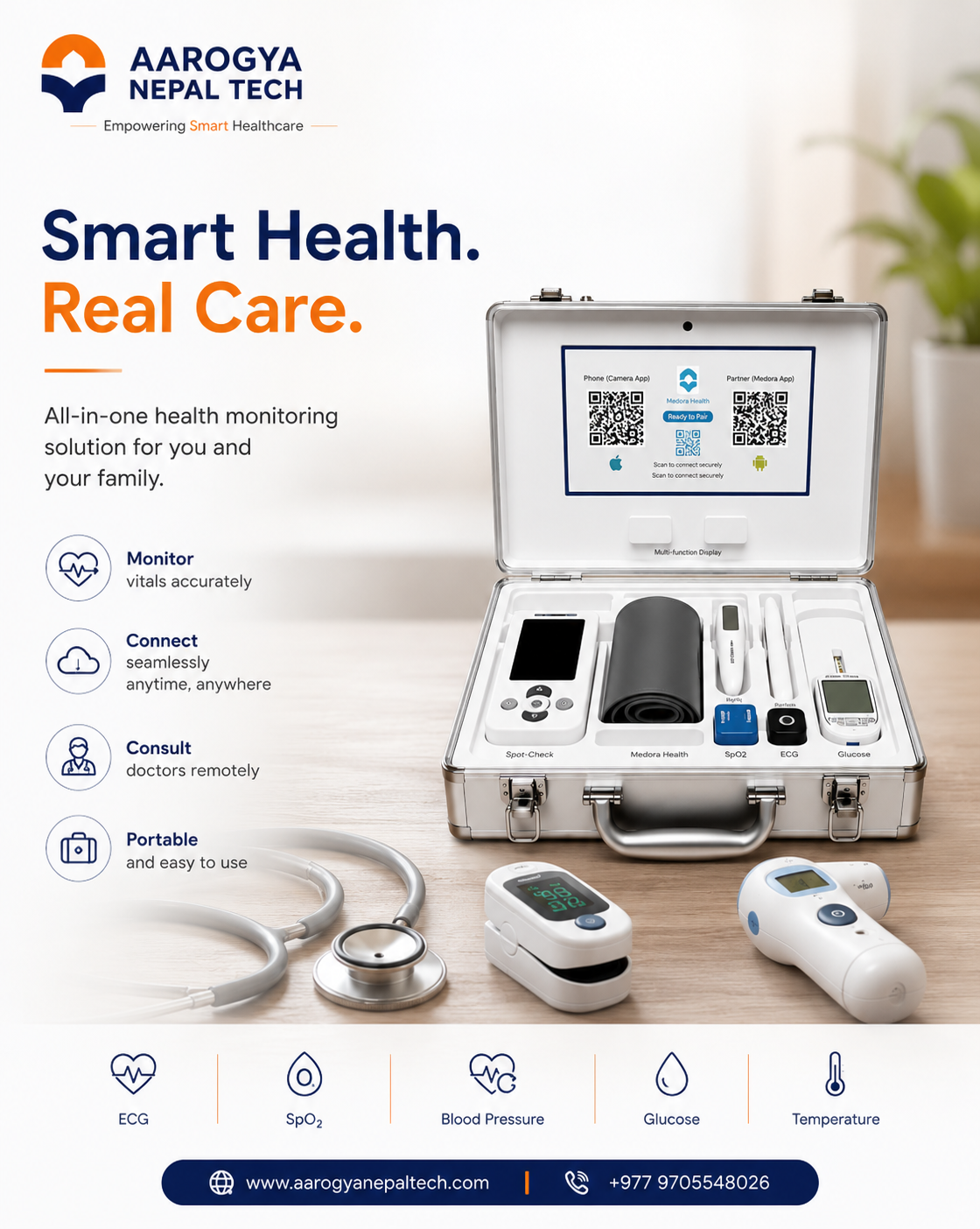
Option 2: Use a multi-parameter all-in-one monitor. One device measures all 5 vital signs to monitor at home, generates a unified digital report, and shares it with your doctor via telemedicine. Learn more in our detailed comparison.
Option 3: Start simple. A BP monitor and a pulse oximeter are the two most affordable and impactful devices to begin with. Add a glucometer if you have a family history of diabetes.
Whichever path you choose, the most important step is to begin tracking your vital signs to monitor at home consistently. The data you collect becomes invaluable when shared with your healthcare provider.
When to See a Doctor
| Reading | Action |
|---|---|
| BP >140/90 consistently | Visit a health post or clinic within the week |
| Fasting glucose >126 mg/dL | Schedule a diabetes screening |
| SpO₂ <94% | Seek emergency care immediately |
| Heart rate >100 or <50 consistently | Consult a doctor |
| Fever >38°C for 2+ days | Get evaluated |
Take the First Step Today
Knowing your vital signs is the first step toward better health. Whether you choose a simple BP monitor or a full multi-parameter system, the important thing is to start tracking — and to act on what you learn.
At Aarogya Nepal Tech, we build portable health monitoring solutions designed for Nepal’s homes, health posts, and remote communities. Our devices make it easy to measure, log, and share your vital signs to monitor at home with your healthcare provider.
Explore our portable health monitoring solutions:
- Portable Health Monitor Device — Comprehensive vital signs monitoring in a compact design
- Praana Sense Health Monitoring Kit — Portable telehealth suitcase for mobile diagnostics
- Smart Blood Pressure & ECG Monitor — Compact dual-function device
Book a demo to see how simple home health monitoring can be.
Have questions? Contact us at info@aarogyanepaltech.com or call +977 14548026 / +977 970-5548026.