
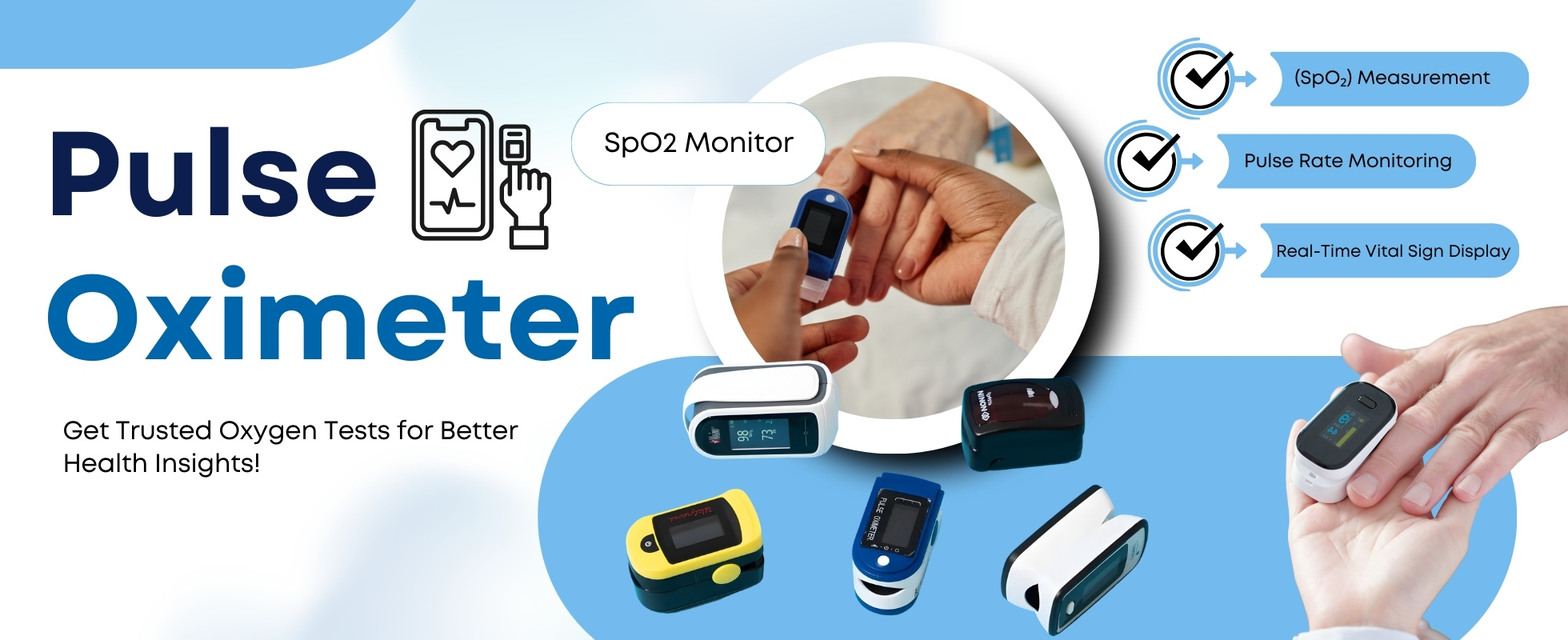

Pulse Oximeter
The Handheld Pulse Oximeter is a dependable and user-friendly health monitoring tool designed for quick and accurate measurement of oxygen saturation (SpO₂) and pulse rate. Constructed for clinical and individual applications, this small gadget provides reliable readings in a matter of seconds, enabling users and medical professionals to confidently monitor respiratory health. It is appropriate for use in clinics, hospitals, health camps, and home care settings due to its ergonomic handheld design, which guarantees comfortable operation.
The pulse oximeter is designed with cutting-edge sensor technology, operates steadily even when it is being continuously monitored. Its user-friendly controls make operation easy for users of all experience levels, and its clear digital display enables users to view results instantly. The handheld pulse oximeter facilitates prompt health assessments and improved decision-making, making it perfect for regular examinations and continuous monitoring.
Features:
- Pulse rate and blood oxygen saturation (SpO₂) can be measured quickly and accurately.
- Lightweight, handheld design for convenient use and easy portability
- A bright, readable digital display that makes readings easy to see
- Easy one-button operation for convenient and speedy monitoring
- High-sensitivity sensor for dependable and steady operation
- Both spot checks and ongoing monitoring are appropriate.
- Stable and accurate readings with a comfortable finger probe design
- Sturdy construction for extended field and clinical use
- Perfect for home care, hospitals, clinics, ambulances, and health camps
Technology and Measurement Principle
The Aarogya Tech Pulse Oximeter operates using photoplethysmography, a non-invasive optical measurement method commonly used in modern pulse oximeters.
Inside the device are two light-emitting diodes that transmit red and infrared light through the user’s fingertip. Oxygenated and deoxygenated hemoglobin absorb these wavelengths differently. A photodetector on the opposite side of the sensor measures the amount of light that passes through the tissue.
By analyzing the variation in light absorption during each heartbeat, the device calculates the percentage of oxygen present in the blood. At the same time, it measures the pulsation of arterial blood flow to determine the pulse rate.
Digital signal processing algorithms filter noise and stabilize the readings before displaying the results on the LED screen.
Components and Design
The Aarogya Tech Pulse Oximeter is designed with simplicity and portability in mind. The device consists of a compact plastic housing with a spring-loaded finger clamp mechanism that holds the user’s finger securely in place.
Key design elements include:
- Optical LED sensor module
- Internal photodetector
- Digital signal processing circuit
- LED display screen
- Power button for activation
- Battery compartment for two AAA batteries
- Soft silicone finger pads for comfort
- Optional lanyard attachment for carrying
The ergonomic clamp design allows the device to fit most adult fingers comfortably while maintaining stable contact for accurate readings.
Operating Instructions
Using the Aarogya Tech Pulse Oximeter is simple and requires only a few steps.
Step 1: Insert Batteries
Open the battery compartment and insert two AAA batteries according to the polarity markings. Close the compartment securely.
Step 2: Prepare the Finger
Ensure the finger is clean and free of nail polish or artificial nails that may interfere with light transmission.
Step 3: Insert Finger into Sensor
Open the clip and place the fingertip inside the sensor chamber with the nail facing upward.
Step 4: Turn on the Device
Press the power button on the front panel to activate the device. The LED display will illuminate.
Step 5: Wait for Measurement
Remain still for several seconds while the device detects the pulse signal and calculates oxygen saturation.
Step 6: Read the Results
The screen will display:
-
Oxygen saturation (SpO₂ percentage)
-
Pulse rate (beats per minute)
-
Pulse intensity indicator
Step 7: Automatic Shutdown
After the finger is removed, the device automatically powers off after a few seconds to conserve battery power.
Maintenance and Cleaning
To maintain reliable performance, the device should be cleaned regularly and stored properly.
Cleaning involves wiping the exterior with a soft cloth or disinfecting wipe. Medical alcohol can be used for sanitizing the finger pads. The device should never be immersed in water or exposed to excessive moisture.
When storing the device for long periods, it is recommended to remove the batteries to prevent leakage and damage to the internal circuitry.
The device should also be kept away from direct sunlight, extreme heat, and high humidity conditions.
Data and Connectivity
The Aarogya Tech Pulse Oximeter functions as a standalone monitoring device. It displays real-time measurements directly on the LED screen but does not store historical data or connect to external systems.
All readings are taken instantaneously and must be recorded manually if long-term monitoring is required. The absence of connectivity also means that the device does not transmit or store personal data, ensuring complete user privacy.
Applications and Use Cases
The Aarogya Tech Pulse Oximeter can be used in a wide variety of healthcare and wellness settings.
Common applications include:
- Home health monitoring
- Hospital patient monitoring
- Sports and fitness training
- High-altitude oxygen monitoring
- Respiratory condition monitoring
- Emergency medical assessments
Healthcare professionals may use the device during routine examinations, while individuals can monitor their oxygen levels at home when needed.
Limitations and Considerations
While pulse oximeters provide useful health insights, several factors can affect measurement accuracy. Poor circulation, cold fingers, excessive movement, or bright environmental light may influence the sensor readings.
Cosmetics such as nail polish or artificial nails may block light transmission and lead to incorrect measurements. Users are advised to remove such coatings before testing.
Pulse oximeters may also provide less accurate readings in situations of very low oxygen levels or extremely poor blood circulation. Therefore, the device should be considered a monitoring tool rather than a definitive diagnostic instrument.
Conclusion
The Aarogya Nepal Tech import high Ensure your safety during trekking and high-altitude adventures with a reliable Pulse Oximeter.Pulse Oximeter is a compact and reliable device for measuring oxygen saturation and pulse rate in real time. Its fingertip design, simple operation, and portable structure make it a practical tool for both healthcare professionals and individuals monitoring their health.
By using advanced optical sensing technology, the device provides quick and accurate measurements that help assess respiratory and cardiovascular conditions. Although it does not include connectivity or data storage features, its simplicity ensures ease of use and dependable performance in everyday health monitoring situations.
As portable health monitoring devices continue to play an increasingly important role in modern healthcare, tools like the Aarogya Tech Pulse Oximeter help make essential health checks accessible to a wider population.