

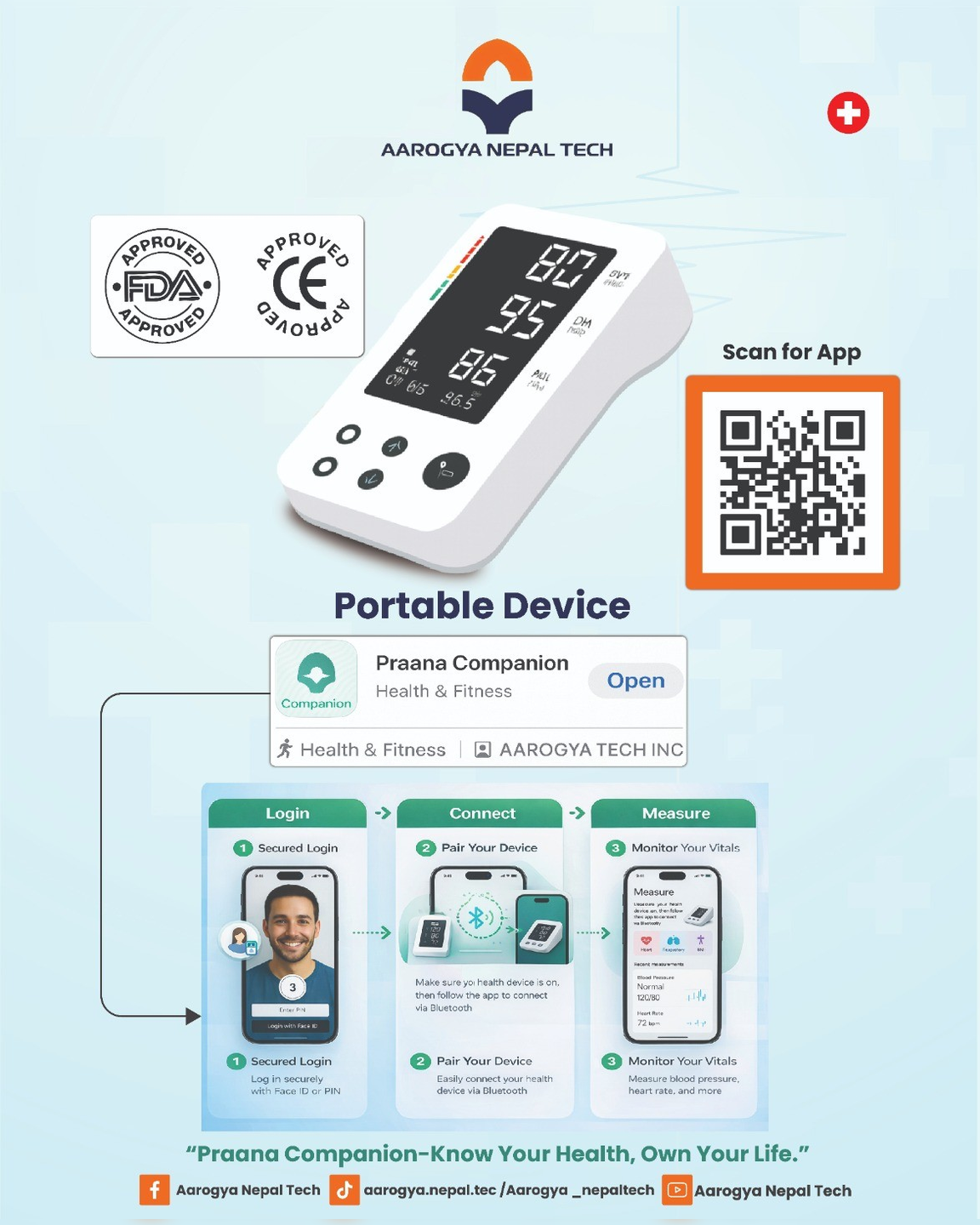
Why Portable Health Monitors Are Essential for Trekking in Nepal
Nepal is home to some of the world’s most iconic trekking routes, including Everest Base Camp, Annapurna Circuit, and Langtang Valley. While these journeys offer breathtaking views and unforgettable experiences, they also expose trekkers to extreme environmental conditions—especially high altitude.
One of the biggest risks is the impact of reduced oxygen levels on the human body. This is where Aarogya Nepal Tech’s portable health monitoring solutions become not just helpful, but essential.
The Reality of High-Altitude Trekking in Nepal
As trekkers ascend above 2,500 meters, oxygen levels begin to drop significantly. This can lead to Acute Mountain Sickness (AMS), which, if ignored, may progress to life-threatening conditions.
Common Challenges Faced by Trekkers:
- Low oxygen saturation (SpO₂)
- Increased heart rate and blood pressure
- Dehydration and fatigue
- Limited access to healthcare facilities
In remote Himalayan regions, immediate medical support is often unavailable, making self-monitoring a critical safety practice.
Why Aarogya Nepal Tech Portable Health Monitor Is Essential
1. Real-Time Monitoring in Remote Locations
Aarogya Nepal Tech’s portable health monitor allows trekkers to track vital signs such as:
- Oxygen Saturation (SpO₂)
- Blood Pressure (BP)
- Heart Rate (Pulse)
This real-time data helps identify early warning signs of altitude sickness before symptoms become severe.
2. Early Detection of Altitude Sickness
AMS often starts with mild symptoms like headache or dizziness, which are easy to ignore. However, a drop in SpO₂ levels or abnormal heart rate can signal danger earlier than physical symptoms.
With continuous monitoring, trekkers can:
- Make informed decisions (rest, descend, or continue)
- Avoid severe altitude complications
- Improve overall trek safety
3. Critical Support in Emergencies
In high-altitude regions of Nepal, rescue operations can be delayed due to weather and terrain. Having accurate health data can:
- Help guides assess the situation quickly
- Support communication with rescue teams
- Enable faster and more effective medical decisions
4. Designed for Portability and Harsh Conditions
Aarogya Nepal Tech devices are:
- Lightweight and compact
- Easy to carry during long treks
- Suitable for rugged environments
This makes them ideal for trekkers, guides, and expedition teams.
5. Useful for Trekking Guides and Groups
For trekking agencies and guides, managing the health of multiple trekkers is challenging.
A portable health monitor helps:
- Track group health efficiently
- Ensure client safety
- Build trust and professionalism
6. Ideal for Remote Health Camps in Nepal
Beyond trekking, these devices are valuable for:
- Rural healthcare outreach programs
- NGO and government health camps
- Telemedicine initiatives in mountainous regions
They bridge the gap where full medical infrastructure is not available.
Why Health Monitoring Matters More in Nepal
Nepal’s trekking routes are unique due to:
- Rapid altitude gain
- Remote geography
- Limited medical facilities
- Extreme weather variability
Unlike urban environments, there is little margin for delayed response. Preventive monitoring is the most effective way to reduce risk.
Practical Use During a Trek
A typical trekking routine with a portable health monitor may include:
- Morning SpO₂ and BP check before starting the trek
- Mid-day monitoring during rest stops
- Evening health assessment after reaching camp
This consistent tracking helps detect trends and prevent health deterioration.
Conclusion
Trekking in Nepal is a rewarding experience, but it comes with real health risks that should not be underestimated. Relying solely on how you feel is not always enough at high altitude.
Aarogya Nepal Tech’s portable health monitor provides trekkers with the ability to monitor, detect, and respond to potential health issues in real time.
For anyone planning a trek in Nepal—whether beginner or experienced—carrying a reliable health monitoring device is not just a precaution. It is a necessity for safety, confidence, and peace of mind.